Why Trim Coverings Do Not Bond Permanently to Polypropylene

The truth behind Polypropylene

If the part you want covered is made from polypropylene, no trimmer can guarantee the covering will stay stuck to it. Not me, and not anybody else. That is worth knowing before you commit, so here is the short version of why, and what it means for your job.

The short answer

Polypropylene can be covered, and it often lasts for years. What it cannot be is guaranteed. There is no adhesive, no primer and no amount of preparation that makes a covering permanent on this plastic. That is true of every trimmer and every product on the market, not just me and mine. The reason sits in the plastic itself rather than in the work, and it is worth understanding before you decide.

First, is it actually polypropylene?

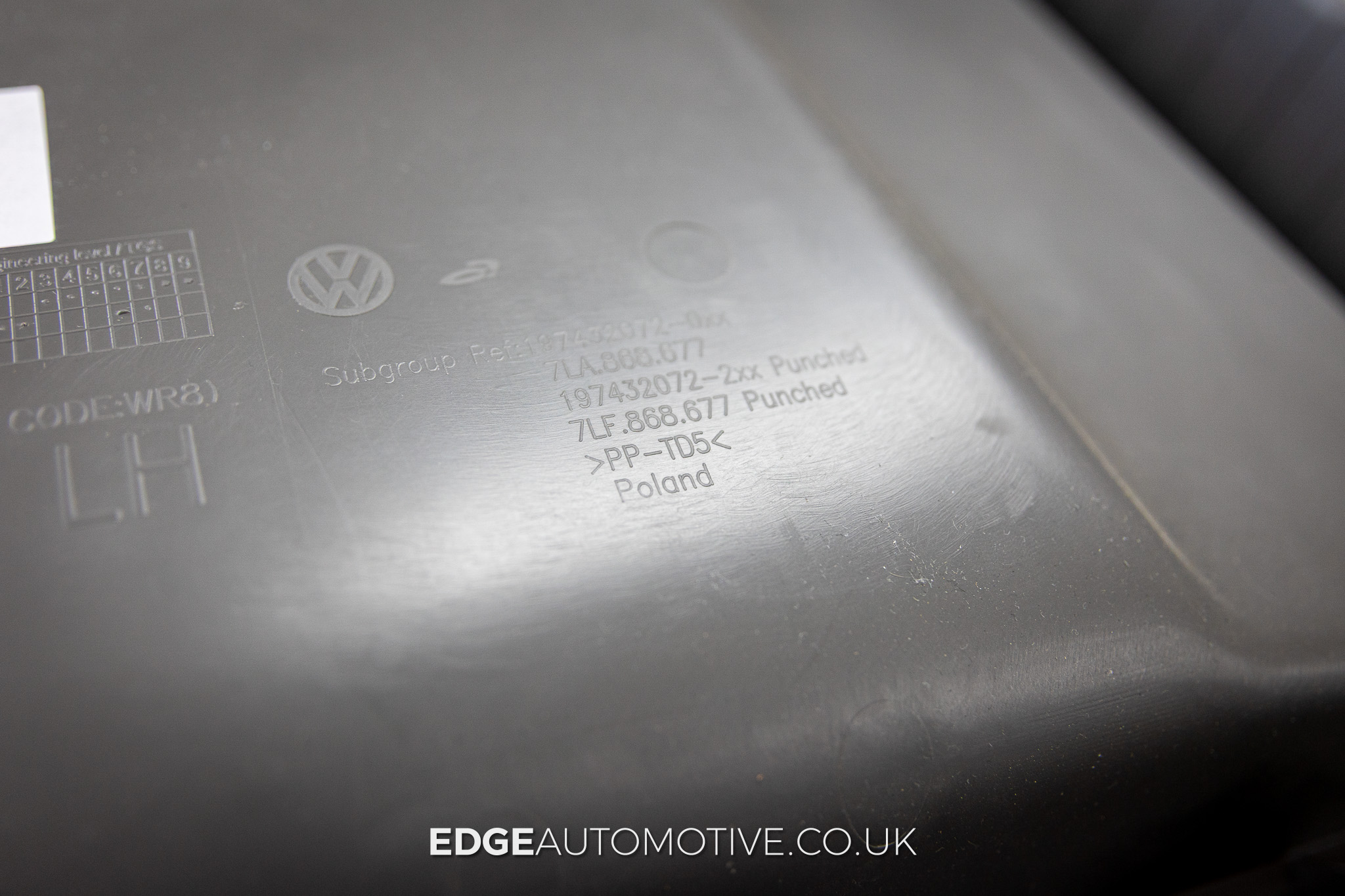
PP-TD5 stamp moulded into the back of a car door card

Turn it over. Most interior plastics carry a recycling stamp moulded into the back. You are looking for PP, sometimes written >PP<, and often with letters and numbers after it such as PP-T20, PP-TD5 or PP-GF30. Those suffixes just describe what has been mixed into the plastic, usually talc or glass fibre.

If it says ABS or PC/ABS, or the part is fibreglass or a pressed fibre board, that is good news. Those take adhesive properly and none of the below applies.

Check the whole part, not one corner. Door cards in particular are often a bondable insert plastic welded or screwed onto a polypropylene surround, so the answer can be yes on one half and no on the other.

Why it will not hold forever

Nothing sticks to it, and that is the point of it. Polypropylene is chosen precisely because it resists chemicals, moisture and adhesion. It has a surface energy of around 29 mN/m and most adhesives need above 36 to work properly. It is below the threshold before you start.

The surface keeps changing. Polypropylene is moulded with release agents blended into the plastic itself, which migrate out to the surface as the part cools. That is how it pops out of the tooling cleanly. The migration never stops, and heat speeds it up. So a surface I prepare perfectly today will keep pushing a fresh release layer up underneath the adhesive for years afterwards. I am gluing to a moving target.

Manufacturers do not bond to it either. When a part is designed from new to be covered in fabric, vinyl or leather, they do not make it from polypropylene. They specify ABS, fibreglass or a fibre board. Polypropylene is for the parts meant to be seen bare, moulded in colour and grained straight from the tool. So a PP stamp is telling you something: this is a part nobody ever intended to be covered.

Surface energy decides whether a liquid spreads out across a surface or beads up on it. Think of rain on a freshly waxed bonnet compared with bare paint. An adhesive has to spread and wet out a surface before it can grip anything, so the lower the surface energy, the less chance it has. Polypropylene sits at around 29 mN/m, and most adhesives need above 36.

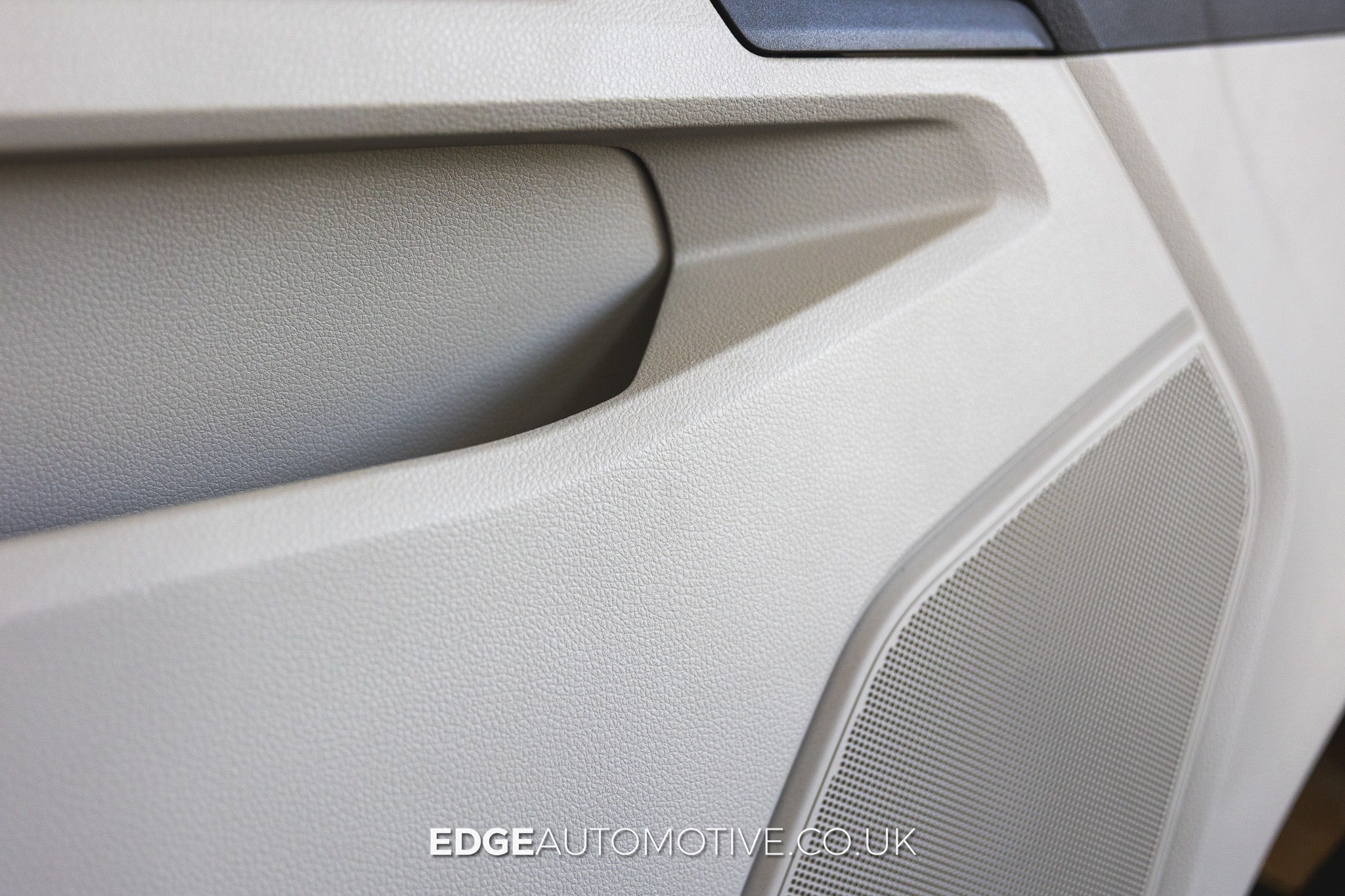
Polypropylene VW T6 Door card

Even the factory does not get a permanent bond

Car makers test trim bonds by heat ageing, typically 90 to 120 degrees for up to 1,000 hours, with thermal cycling on top.

What matters is how they score it. They do not ask whether the bond held. They measure what percentage of its original strength is left, and depending on the part, 30 per cent can be an acceptable pass.

That is the standard a factory bond is held to. Not permanence, managed decline.

Worth being clear about what those figures describe, though. Those tests are run on parts the manufacturer designed to be covered, bonded to substrates chosen precisely because they accept adhesive: ABS, fibre board, fibreglass. Best case materials, matched adhesives, controlled conditions, a production line and a laboratory behind it. And the target is still only to retain a percentage of the original strength.

Polypropylene sits below that baseline before you start. Every bond in your car is on its way out. On polypropylene it starts from a lower figure and gets there sooner.

What I do about it

I am not going to publish my process, but every polypropylene part goes through multiple stages of solvent cleaning and surface preparation before any adhesive touches it, including a step to temporarily raise the surface energy of the plastic, followed by a primer and an adhesive both formulated for polyolefins.

That is also the ceiling. It is the full extent of what is available to anybody working on this material outside a factory, and I have been looking for something better since 2010.

What this means for your job

Plain terms, so there is no misunderstanding after the event.

If your part is polypropylene I will tell you before it is booked in. If you want the work done anyway, it is carried out at your own risk. Specifically:

  • There is no warranty on the bond.

  • If the covering lifts, moves or delaminates at any point, that is not a fault in the workmanship and it is not a comeback.

  • Any remedial work is chargeable at the normal rate.

I have covered plenty of polypropylene parts that are still perfect years later. I have also had parts come back where the preparation and the materials were identical. The difference was in the plastic, not in the work, and there is no test I can run beforehand that will tell either of us which way yours will go.

Where that leaves us

If I have sent you a link to this page, it is because the part you have asked about is polypropylene, or I have good reason to think it is. None of the above means I am turning the work away. It means the decision is yours, made with the full picture rather than after the event.

Have a think and let me know either way. If you want to go ahead, I will confirm the price and a date. If you would rather leave it, that is completely fine and I would sooner you said so now.

If you have found this page on your own and you have a part you are considering, send me a message and I will tell you honestly what to expect.

GET IN TOUCH

Click or drag a file to this area to upload.